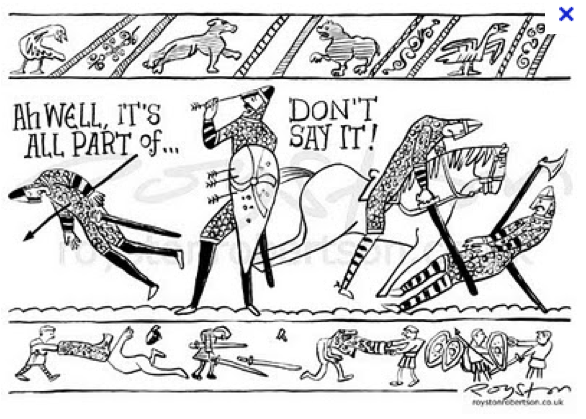
Last week I posted about a stop-me-in-my-tracks question on the use of humour in interpreting tales of bloodshed. You may need to read about that before this makes any sense – click here.
Several people have got in touch (many thanks for that, it’s always very encouraging to hear from someone who’s read this blog – and please don’t be shy about putting your thoughts here) to suggest it comes down to the audience and the context. For families, fun, activity-based interpretation – cartoons work. Yes, I agree. Completely. I think the cartoons in the geocache were spot-on.
I also think Horrible Histories have done a great job at popularising history for children and young people and can see why some interpreters are following a similar approach.
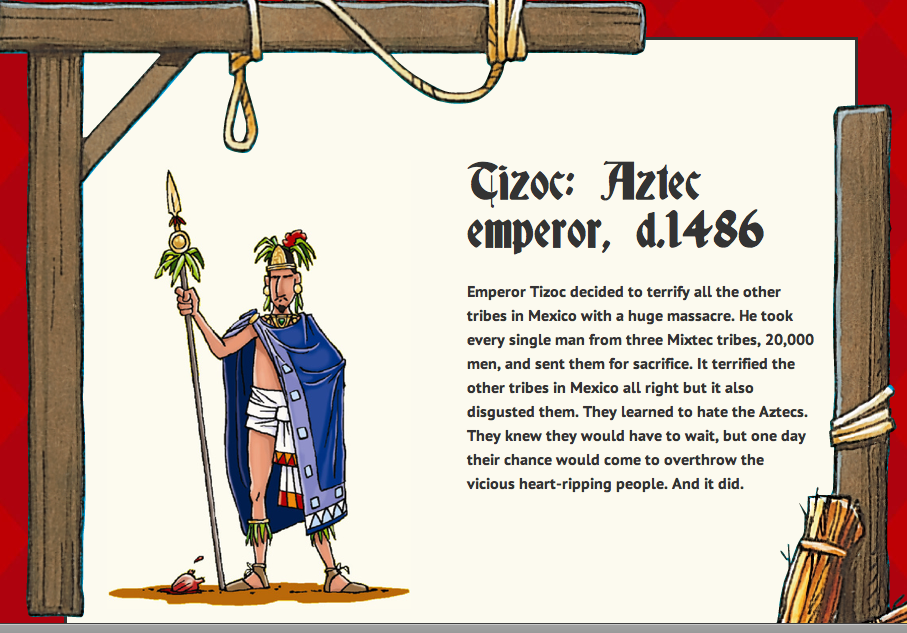
Horrible history – Cry boo to the baddies!!
So the question really is, when is using humour not appropriate, or at least risky, in interpretation? My answer is when it will disrespect the people whose story you are telling, or those closely connected with them.
I see interpreters, like storytellers, as poised between two groups of people, our audiences and the people whose stories we tell. Community interpretation, oral history projects, and outreach projects often involve us asking people to tell us their stories. The material they give us has power and value and we should respect it. One of the things that I admire in the best storytellers is their respect for their material and its source.
But what does that mean in practice? Maybe simply that there are times when we need to stop and think not only about our audiences but also about our sources. I suspect there are no hard and fast answers, and what is okay will shift from project to project, and certainly country to country and culture to culture.
Let’s begin with the most obvious example. Interpreting events within living memory (and to me that means things that someone alive now could have heard at first hand) needs great sensitivity.
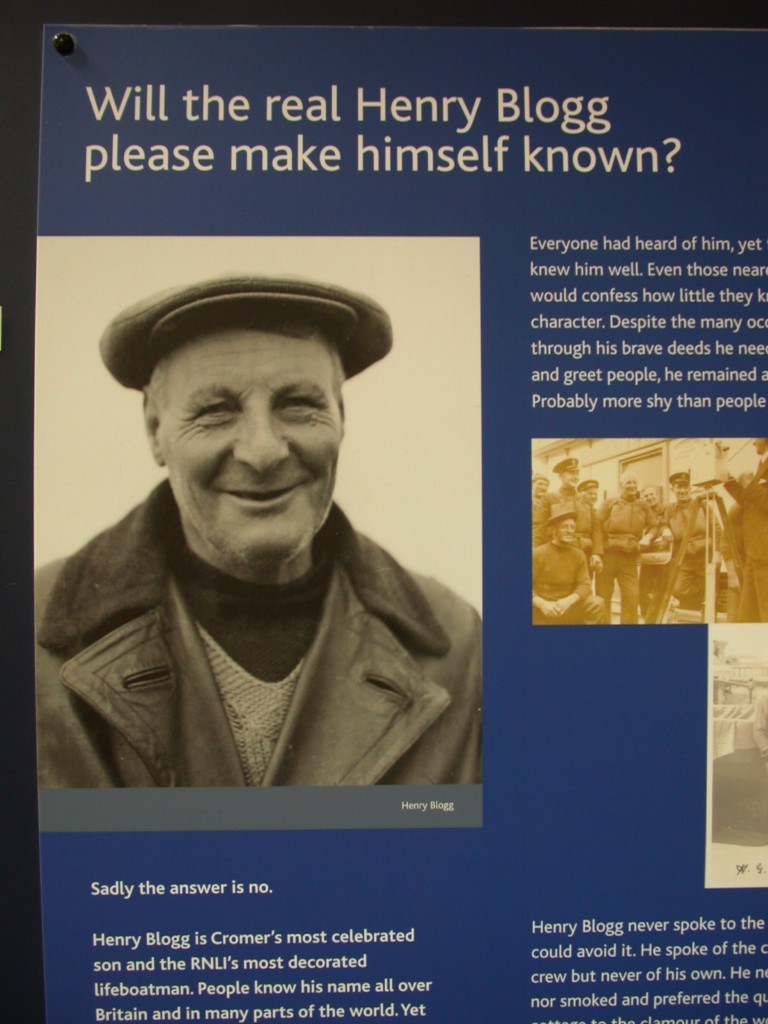
Much of the text in the Henry Blogg Museum is based on interviews with family members.
In the RNLI (Royal National Lifeboat Institution) Henry Blogg Museum at Cromer, for instance, we interviewed fishing and lifeboat families and took meticulous care to use their accounts accurately and obtain their permission for the way we used them.
Some sensitivities are about more than personal, family memories. Some events touch whole communities and countries. Our excellent guide for the 1916 Uprising Tour of Dublin, led a great walk. He used humour to help the group gel but never to lighten or diminish the events he was telling us about.
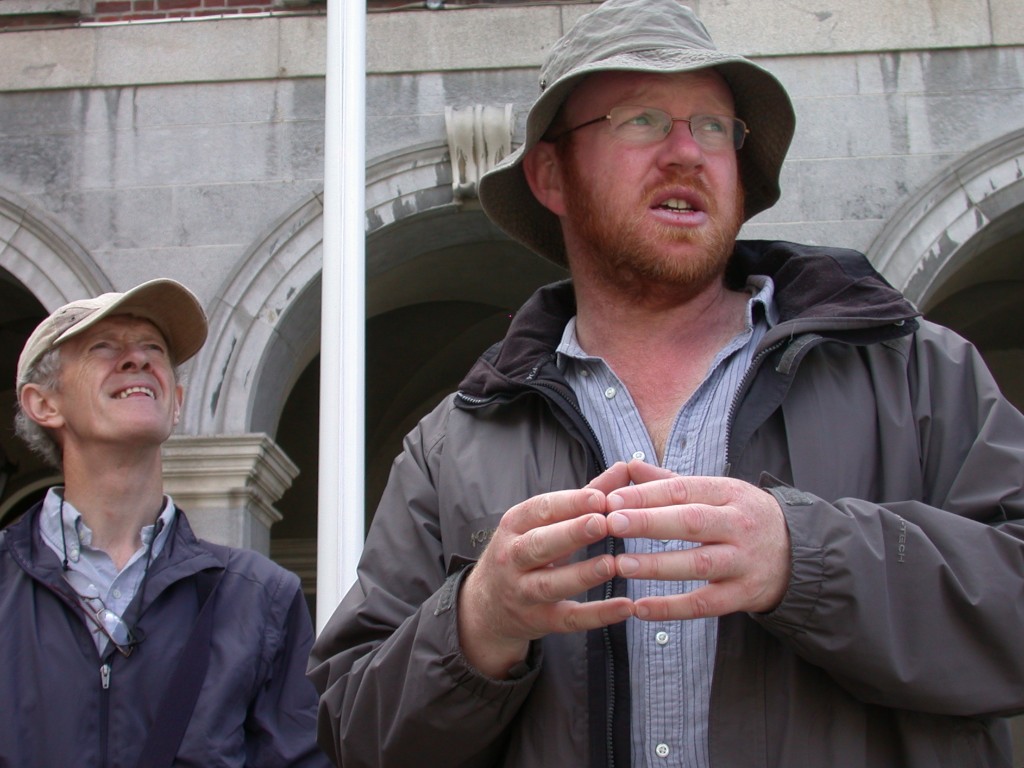
At Dublin Castle where the 1916 Uprising began
Community memory seems to stretch back further back than the personal. It would be a brave, and possibly foolish, interpreter who tried to sweeten the pill of the Irish Potato Famine (1840s) an event that runs deep in the national consciousness.

Irish famine sculptures on quayside in Dublin
Interpreters deal with shades of light and dark. Choosing the tone of our telling to reflect that can both enrich our palette and enhance the visitors’ experience (and stamina). Our audiences don’t need it light all the time.
But maybe the truly horrific needs to be paced – and humour can help.
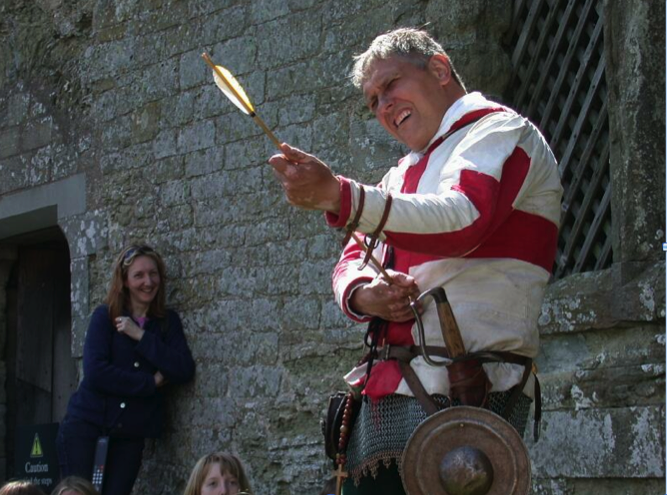
Live interpreter combining humour with horror
Some years ago I saw this guy (I have lost his name, if anyone knows it please could you tell me) perform his One Man Agincourt at English Heritage’s Stokesay Castle in Shropshire. It was brilliant – gruesome, horrific, tragic and funny.
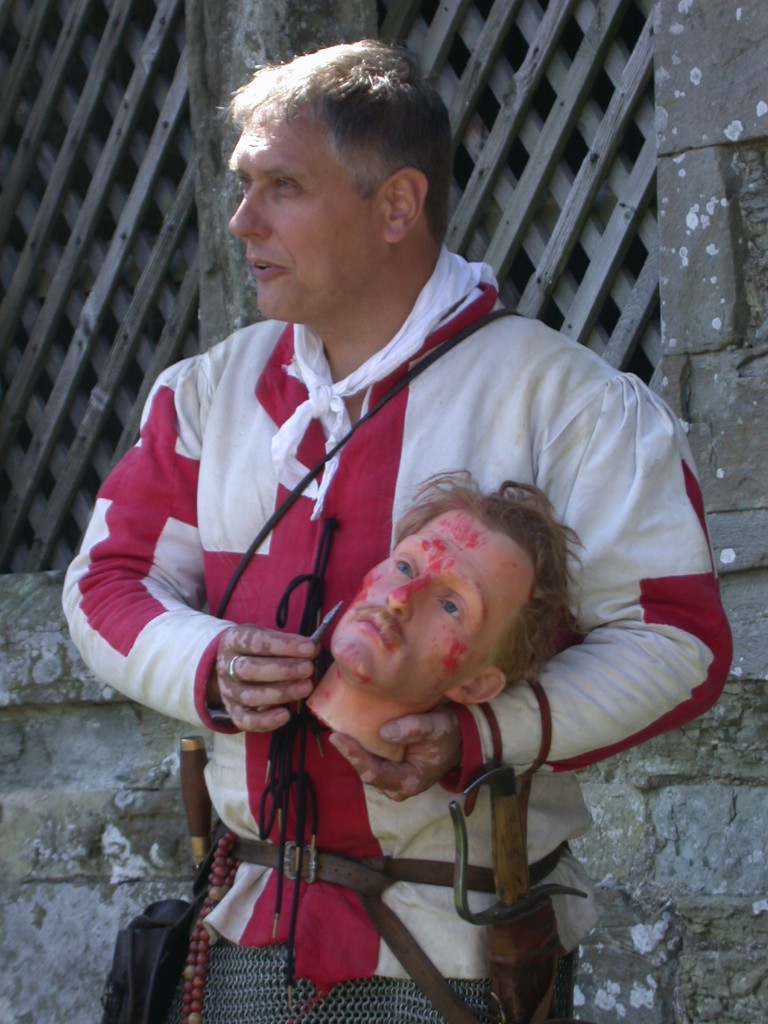 He was masterly in using tone and mood to grip his audience. He told me he had been a stand-up comedian and I could see it in his timing. He had also been a soldier and we could feel that in his uncompromised, vivid description of what it would have been like to be in that battlefield.
And none of the above really explains why I was so shocked to discover what the Battle of Shrewsbury meant or why I was, and am, so sure that it had to be treated seriously – unlike the earlier hillfort remains a few miles away.
I think it comes down to the written accounts, and that we know what impact that battle had on the people who witnessed it. That is the core of the story I have remembered six years later. I think if I was involved in interpreting the site, that would be my theme, the nub of my story, what I would want people to go away reflecting on (as I did). The hillfort seems different – we know that everything we say about what happened there is a construct. We are dealing with generalities not one date with real, named people. To me that seems to make a difference. What do you think?