Opening places to the public and creating interesting days out is hard work – and now I have the blisters to prove it! This year’s Farm Open Day at my brother’s award-winning Norfolk farm begins in 35 minutes. We, and especially he, worked late last night. He had worked for many days before that to make this one day happen.
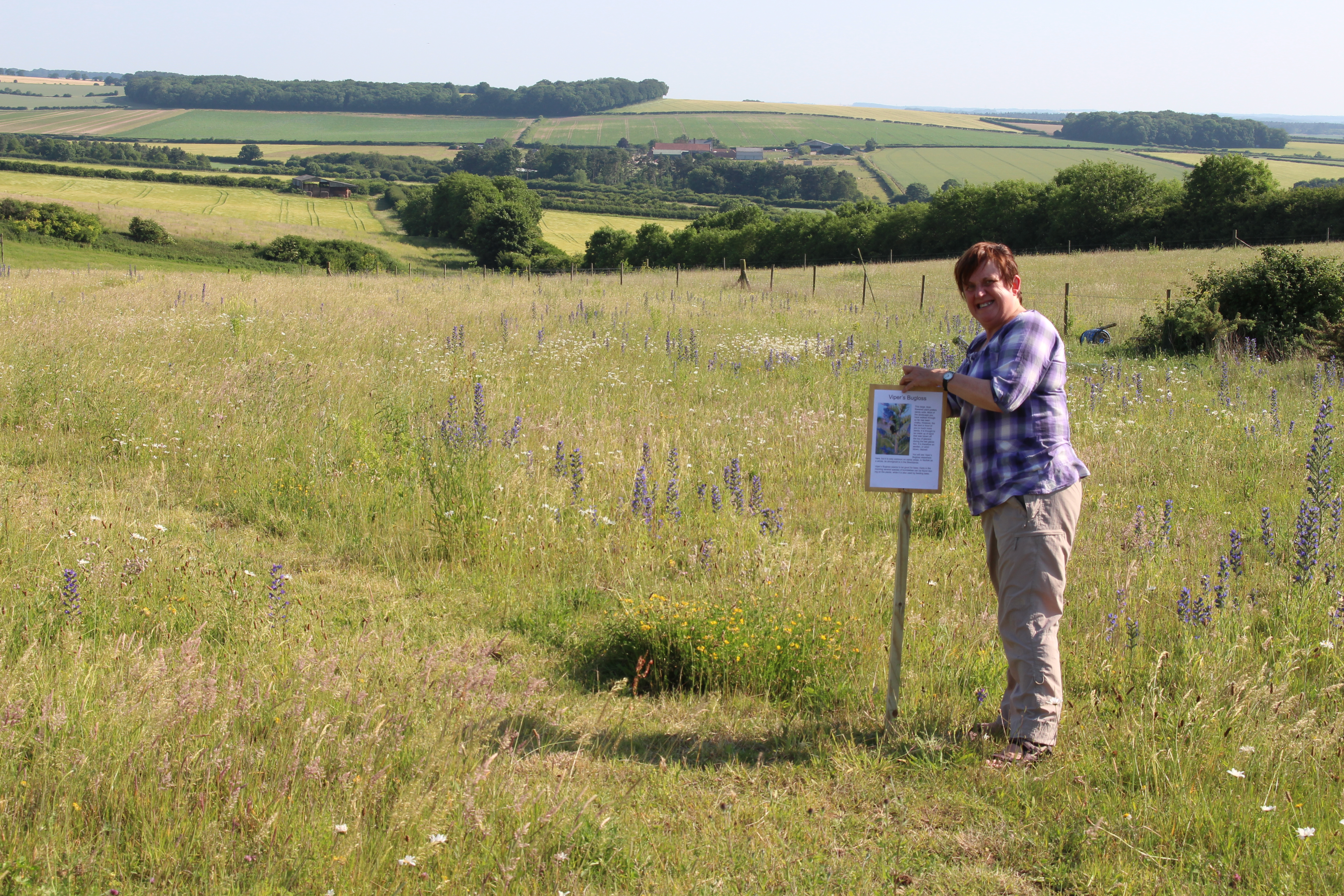
Getting my hands dirty for once, installing the signs for Abbey Farm’s Open Day.
He was up again early this morning doing something – I know not what – visitor-related with a JCB. Now the sun is shining, the signs are up, the exits to roads are blocked by bales and farm vehicles. People should have a good day on the farm.
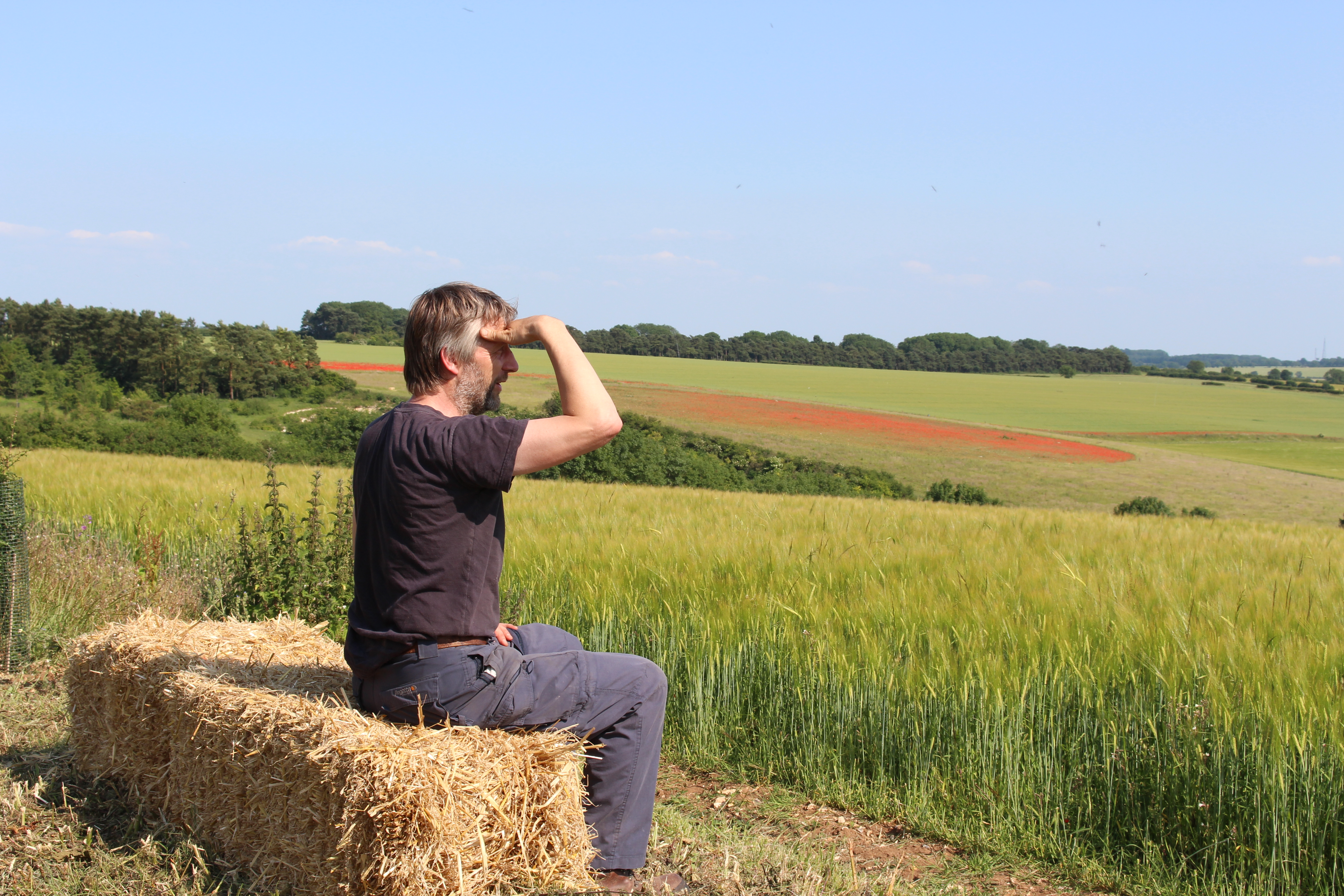
The Open Day enables the visiting public to see parts of the farm they cannot usually reach.
This is a free day. All proceeds (for teas on sale in the garden) will go to a local charity for children with learning difficulties. My brother, the local entomologist who will lead the bumblebee walk that I am very much looking forward to and the people from the Norfolk Beekeepers Association and the Butterfly Conservation Society (who will also lead walks and staff exhibitions) are all doing this for free.
It reminds me just how much wildlife and human heritage and their interpretation in the UK owes to volunteers. I salute them.
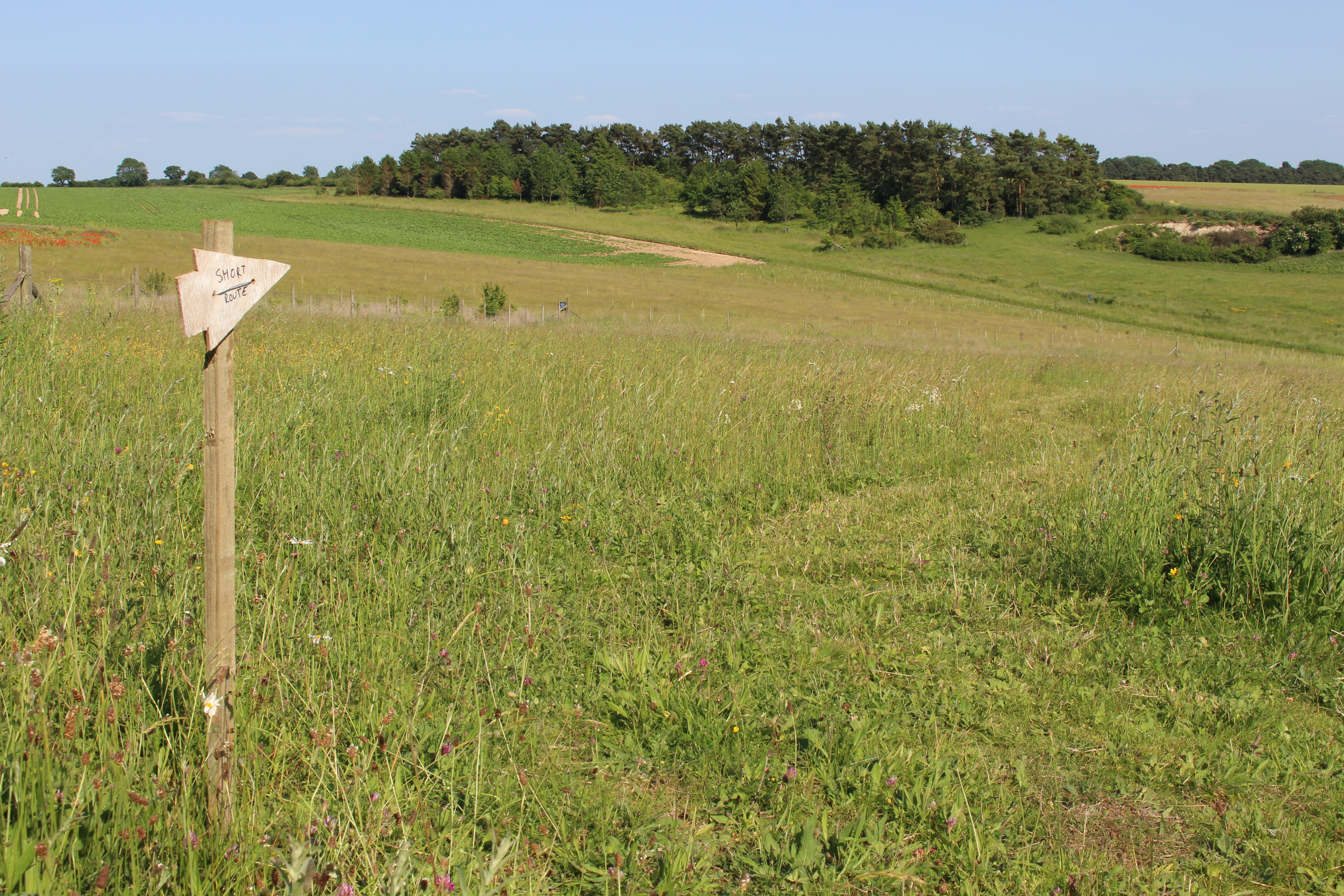
Setting up a route through the fantastic example of recreated chalk grassland involves mowing a route and , of course, waymarking.
All over the country , in many of the organisations I work with including RSPB, National Trust, English Heritage, WWT, in country parks, churchyards, nature reserves and small museums volunteers are a vital mainstay. Three cheers for them all.
My last post was about some of the issues involved in making your workplace into a visitor attraction. I was focusing then on commercial operations. It is an interesting contrast now to be involved in a place doing it for love.
This whole operation – and , believe me it is an operation – there is a lot involved in choosing the routes, organising the guided walks, risk assessment (very important on a farm), meeting, greeting and of course the whole business of interpreting and explaining the place people have come to see.
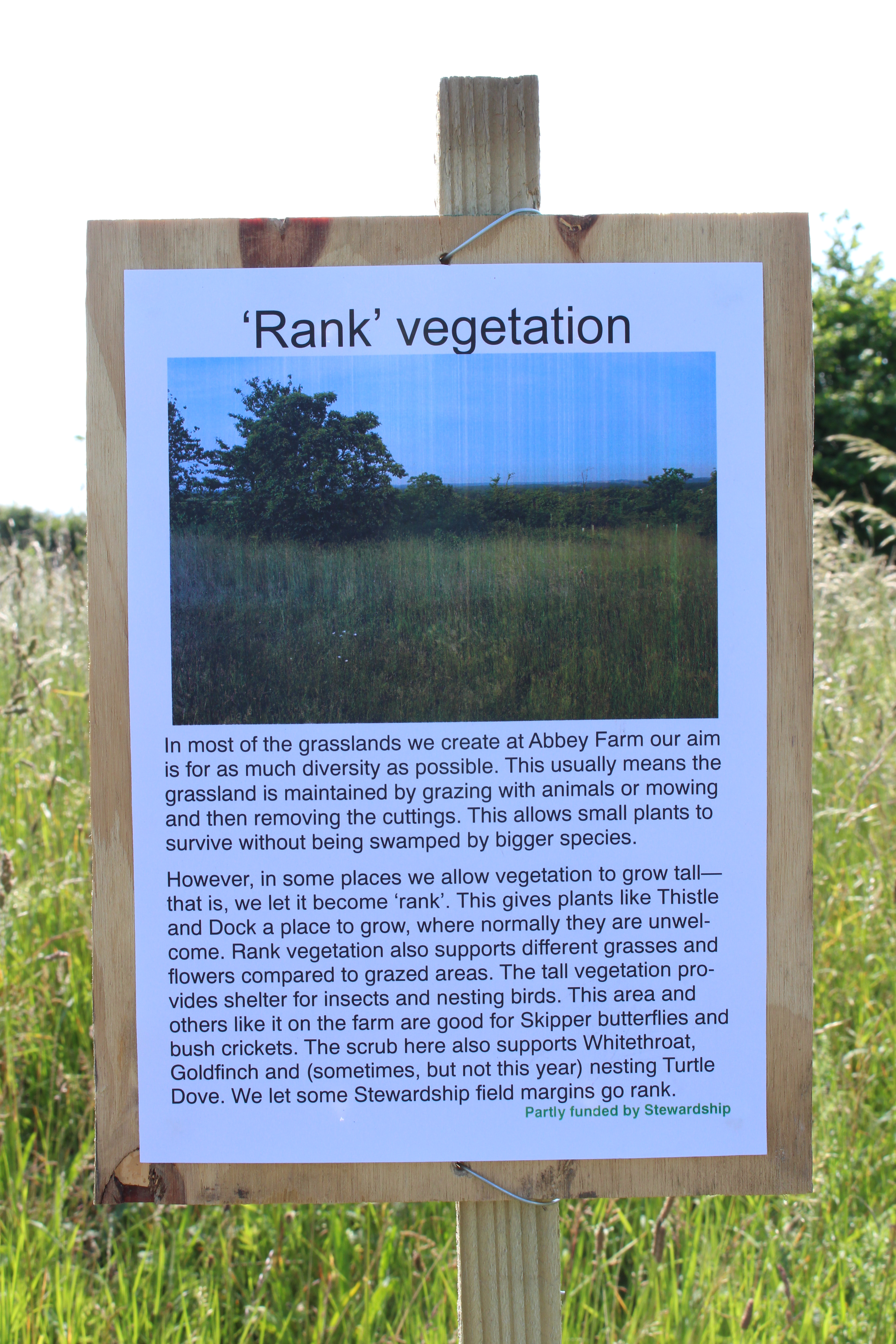
Points of interest are highlighted by temporary signs.
This is about explaining farming and how it works, about demonstrating how farming and wildlife can thrive together (there is nowhere better to do this – Abbey Farm has a string of awards for conservation farming). It is about sharing a lovely place and giving something back to the taxpayers who at the end of the day fund the Stewardship Scheme that makes the conservation work possible.
This effort is incredibly valuable and so are the people who do it. I am off to join them – I will be on ‘meet and greet’. I am delighted to be able to join the honorable company of volunteers today.