
I have been asked why I thought the English language needed a new word, especially a rather clunky portmanteau word like interpretelling.
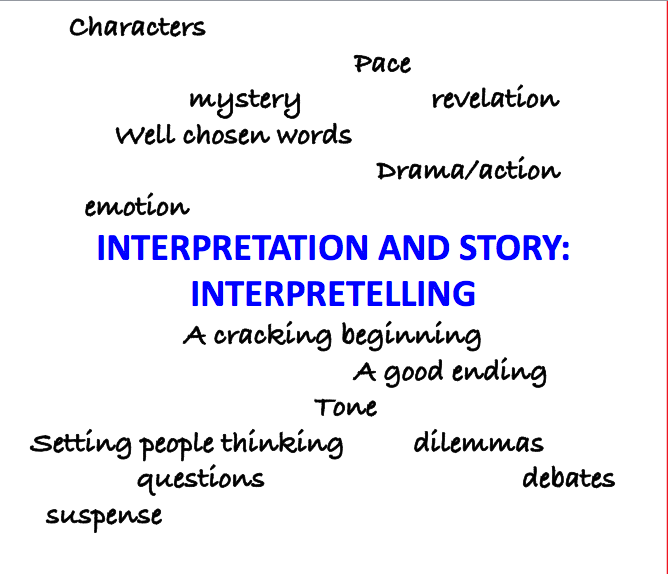
The portmanteau does pack a lot of stuff, though. This is only some of it.
I do not have deeply serious or illuminating answer.
As with many stories there are different versions, or maybe more accurately – the one-liner, the short story and the novel.
The one liner
It was the excitement of sunshine, wine and parrots – with a lot of laughter thrown in. I had been in Australia 3 days and discovered it was place I could fall for big time. In fact I probably was falling. Or at least wobbling dangerously off balance. There I was, at a real-time Australian barbie, on my third glass of wine, still slightly jet-lagged – and one of the conference organisers who had paid for me to fly to this wondrous place was asking a sensible question about my keynote. Horror.
I did that scary ‘must sober up instantly’ thing and started to say something about the fundamental importance of understanding the mechanics and techniques of storytelling in developing compelling interpretive content. At least that was what I was trying to say what came out was ‘blur blur blur … interpretelling’. He picked it up, laughed and suggested, I suspect not very seriously, that I might be on to something. Or he may have said I must be on something.
Later, I thought he was right.
That was how I told the story in my keynote. It went down well
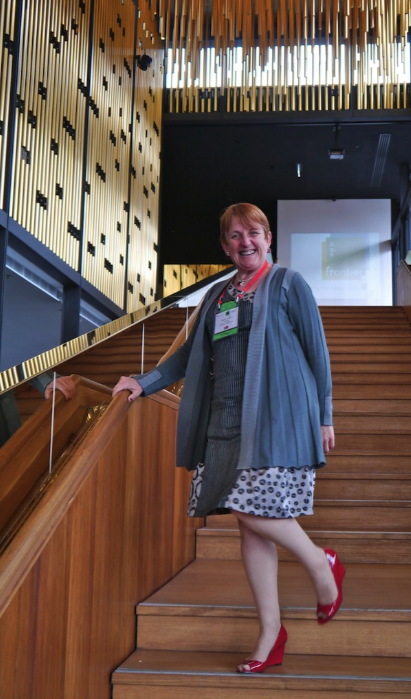
‘Interpretelling’ went down well at the Museums Australia?interpretation Australia keynote. the red shoes went down even better.
The short story
In a another, longer version of the story I could tell you, it was the green banks of the River Suir, Guinness, and medieval castles – and a load of craic thrown in.
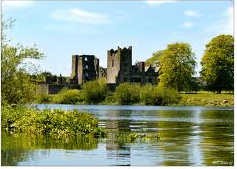 I was working with the communities of the beautiful medieval towns of Cahir, Carrick on Suir and Clonmel and found myself saying ‘You’ve told me the histories of these towns, but what I want, and your visitors will want is the story of these people. You’re calling this the Butler Trail, tell me their stories, what did they do here? Give me gossip and rumour. What makes them interesting?‘ The atmosphere changed instantly. Everyone round the table relaxed, shoulders dropped. I realised I had stopped being a history examiner and had become a chatty woman. And they started to tell me stories, which, it has to be said, the Irish do uncommonly well. We laughed. We argued. We doubted, we affirmed. We surmised and suggested. We brought those Butlers to life – or rather they did.
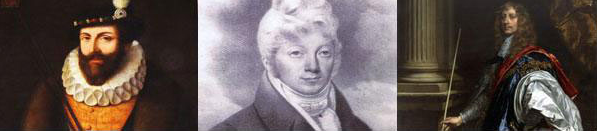
I was told that one of these was the father of the Virgin Queen’s lovechild – such stories.
Writing the leaflet from there was so much easier. I was sent the final result a week ago and was delighted by it. Our time together, and I am sure a lot of subsequent work, had transformed it – for the better
Classically trained interpreters will recognise that what I did was get the group to produce themed interpretation based around the theme of “The Butlers, one of the greatest Irish families lived here for centuries and shaped each of these towns”. Yes, I did. But what really matters to me is that all it took was me asking them not to recount the history of the towns but to tell me the story of these characters.
That set me thinking on a path that led to’ interpretalling’.
The novel
The long version is longer than I can tell you here. Somewhere near the beginning of it is a passionate young woman about to launch her business. She walks the hills of her home trying to think about what why communicating about heritage and wildlife really matters. She decides it is story, passing on things of value from generation to generation. She calls the business TellTale. A friend designs her a logo of words taking flight, lifting off from the page. She is inspired.
 The business, like the words, takes off and she forgets for almost a quarter of a century until one day in Carrick-upon Suir she says ‘I don’t want history, tell me the stories‘. Once again the passion for the past is freed.

Later, when she remembers, she says ‘interpretelling‘.