I am a nerd. Not a techie nerd, or a social media nerd, or even a gadget nerd. I am a panel nerd. I can’t resist them. I am constantly looking to find, and create, really good ones.
Panels are rather like gadgets, actually. There are loads out there. Some are just plain useless and are not worth the time of day. A lot are based on a really good idea but are tragically flawed. A few are solid gold and life-enhancing and when you find one of those, celebrate. This post is part of an occasional series celebrating great panels.

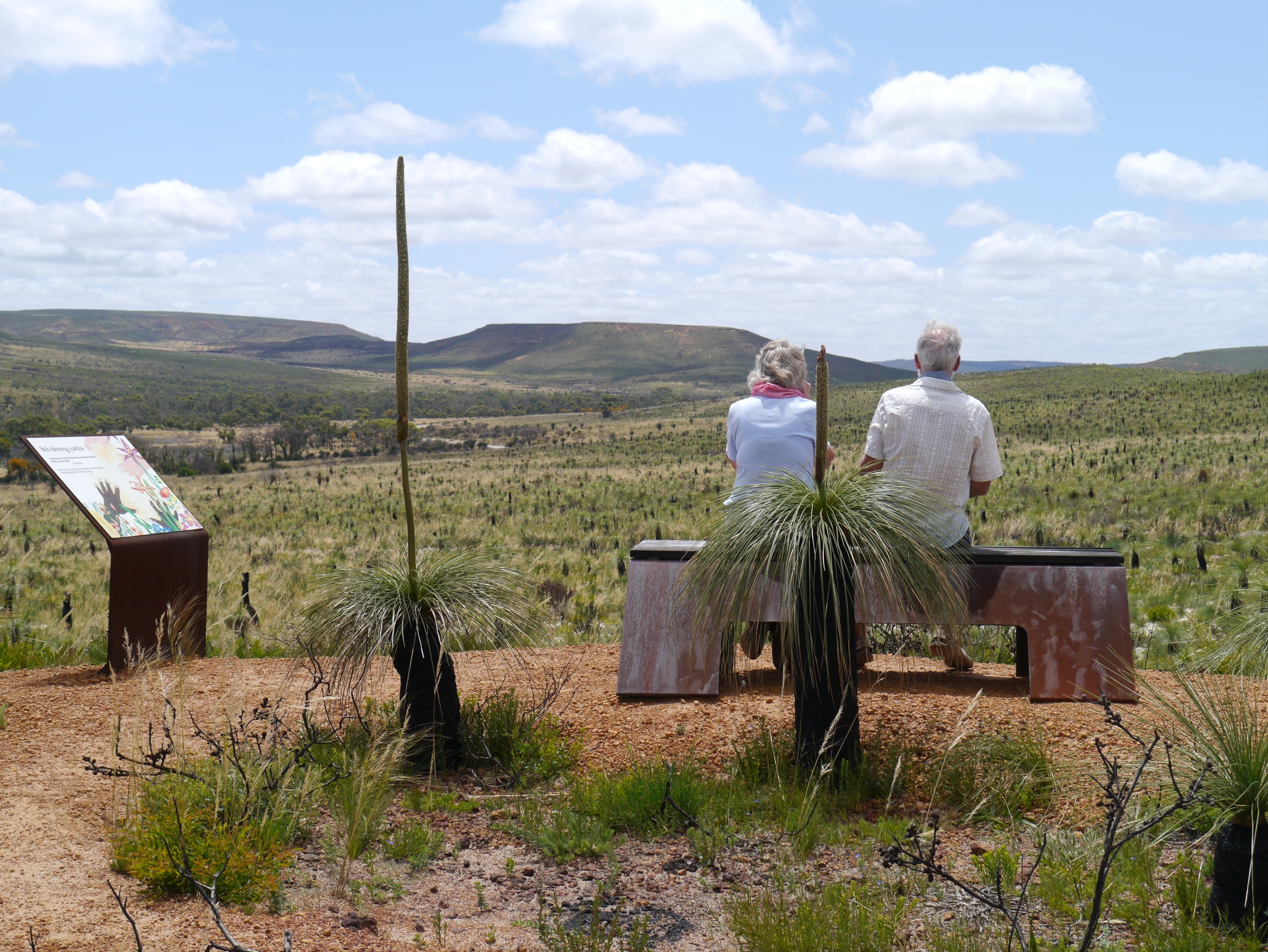
Great panels often have beautiful simplicity. This panel in Mount Leseur National Park exemplifies that.
It’s one thing to describe what makes a really good panel. But what does one look like?
Probably unique – just as my sat nav. does not look like my bean slicer (to pick two gadgets that I love). You recognise a great panel because it does its job so well.
So why do I call this a great panel?

First look at the pictures – what do they say? Brown and white hands mirroring each other, reaching towards each other, surrounded by natural beauty. One of the cliches I cannot abide in nature conservation management and, especially, interpretation is ‘a place for people and wildlife’. Look at how much more vivid, profound, alluring this is.
Moreover, this picture speaks of two nations, two perspectives and of joint custodianship – a theme that runs consistently (although often less powerfully) though all the interpretation here. This is a bold, political graphic – it shows two sets of hands on the land. This is Western Australia where land rights have been and are bitterly contested.
Then look at the title – what does it say? Probably, if you come from a cultural background like mine, you don’t know. You don’t understand. There is mystery here. A tension. Depth. This is not straightforward.
I’m not going to start on the text yet. Let’s look at the context; it always matters.
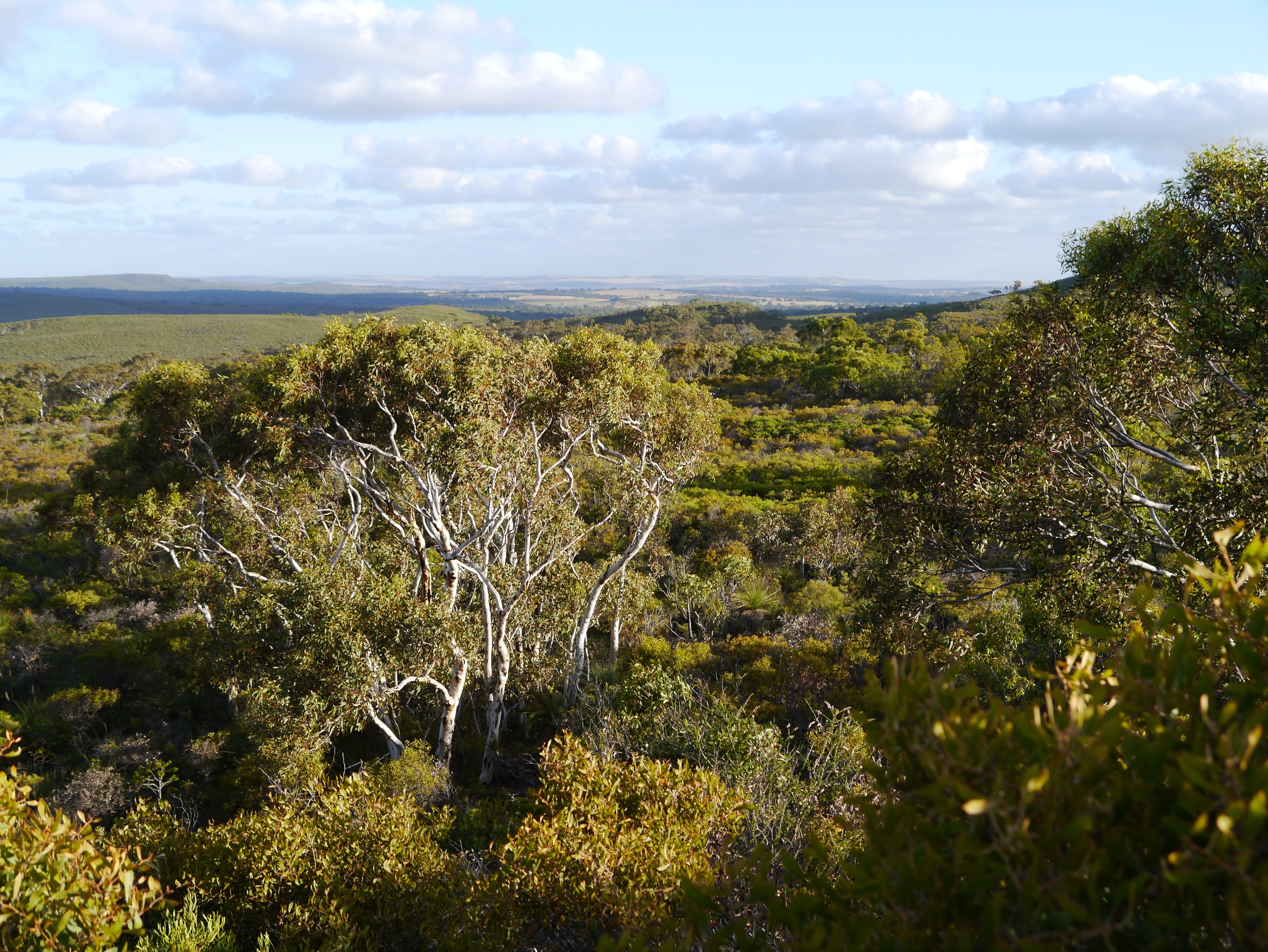
Mount Leseur National Park, Western Australia
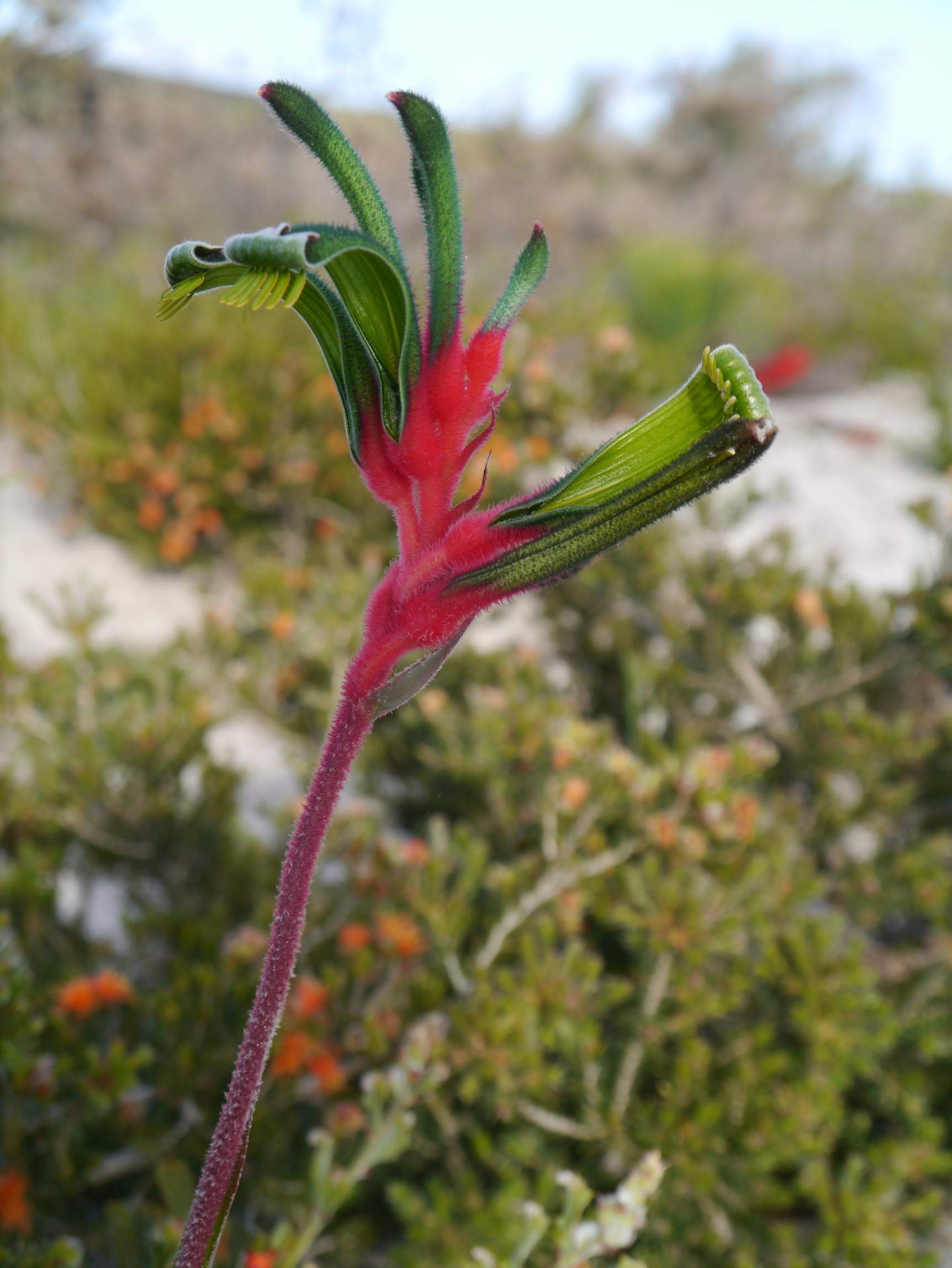
Kangaroo Paw
This panel is on a lookout at the exit of a global Biodiversity hotspot. Mount Leseur is one of the richest places botanically in the world. It is stunningly, utterly glorious.
This lookout is a place for reflection. The seat (another highly important interpretive intervention – none of this happens by accident) invites that. It will be a magnet for Sensualist visitors. The people who choose to sit here are those who are least likely to want to be told a load of stuff. Even the presence of a panel is likely to be challenging.
This panel is an interruption. It’s okay to interrupt, if what you have to say is really important, or if it adds to the conversation. I think this is a great interruption.
Let’s go back to the words.

35 words and every one pulling its weight. One big huge idea clearly and simply put. That is interpretive writing at its best.
I love this as a piece of efficient, message- , location-, audience- and experience- focused writing.
Those few words:
- Relate directly to the experience of this spot, physically and psychologically
- Carry a powerful ‘love’ message inviting us to cherish our experience of the natural world (see here for a reminder of why love messages matter for nature conservation)
- Emphasise the dual cultures and custodianship
- Create an excellent ‘parting shot’ encouraging people to remember their experience
- Convey a call to action
That’s a shedload of good interpretive best practice in action.
It has taken me almost 20 times as many words to describe what this panel does. That’s how good it is.
And, yes, they could have ‘fitted more onto the panel’. Maybe the greatest achievement here is that they didn’t.
If you want to know how to produce panels that are as good as this, come on one of my training courses such as ‘How to write words that people will want to read’ or ‘If you’ve only got 50 words make everyone count’. Look at the training and mentoring pages on our Telltale website to find out more.
All photographs thanks to Peter Phillipson, TellTale. Follow Peter @ TellTalePeter on Twitter.
Click here to find out more about TellTale and our work.